
Studio Visit: Nonsense Books' Jerrod Beck
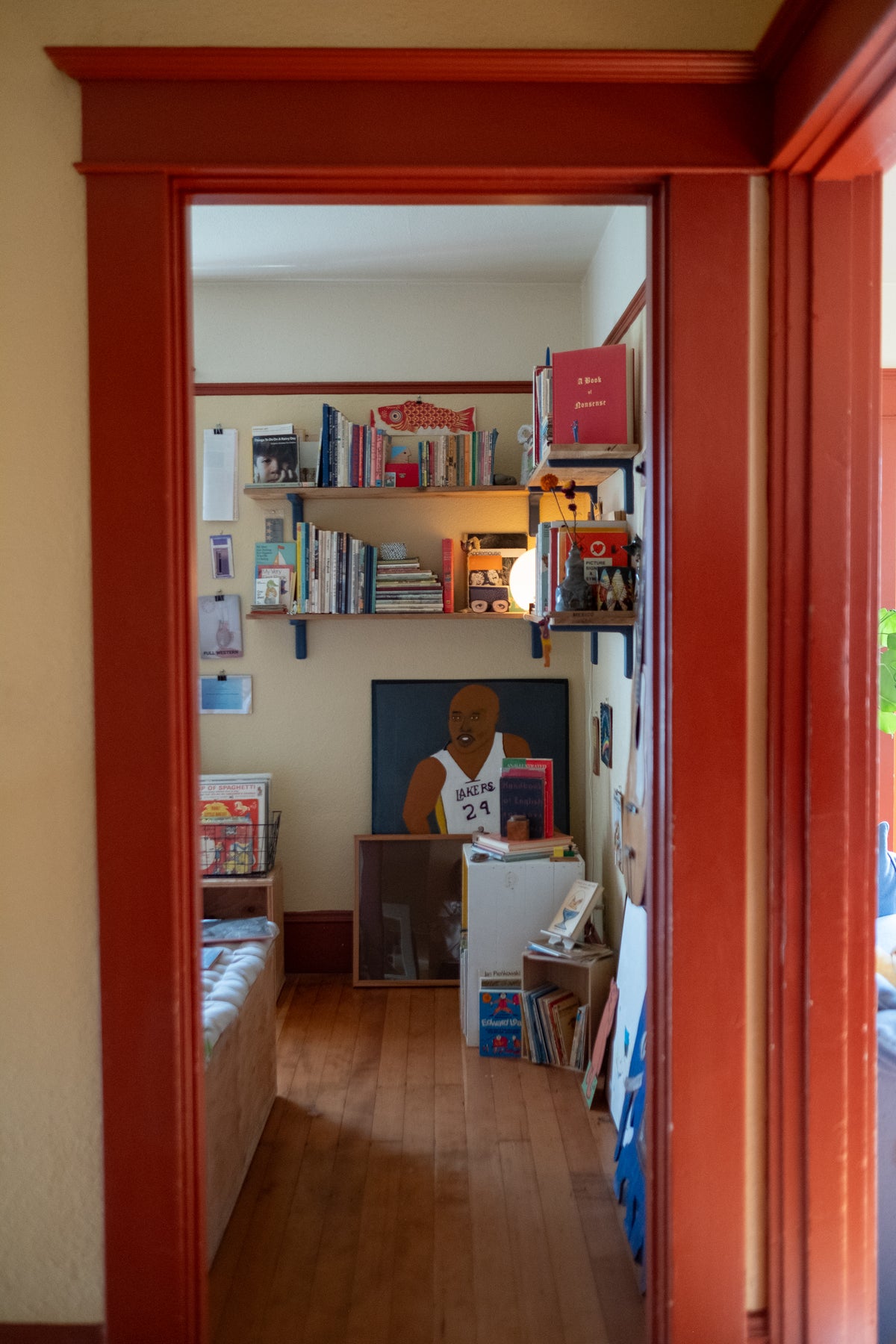
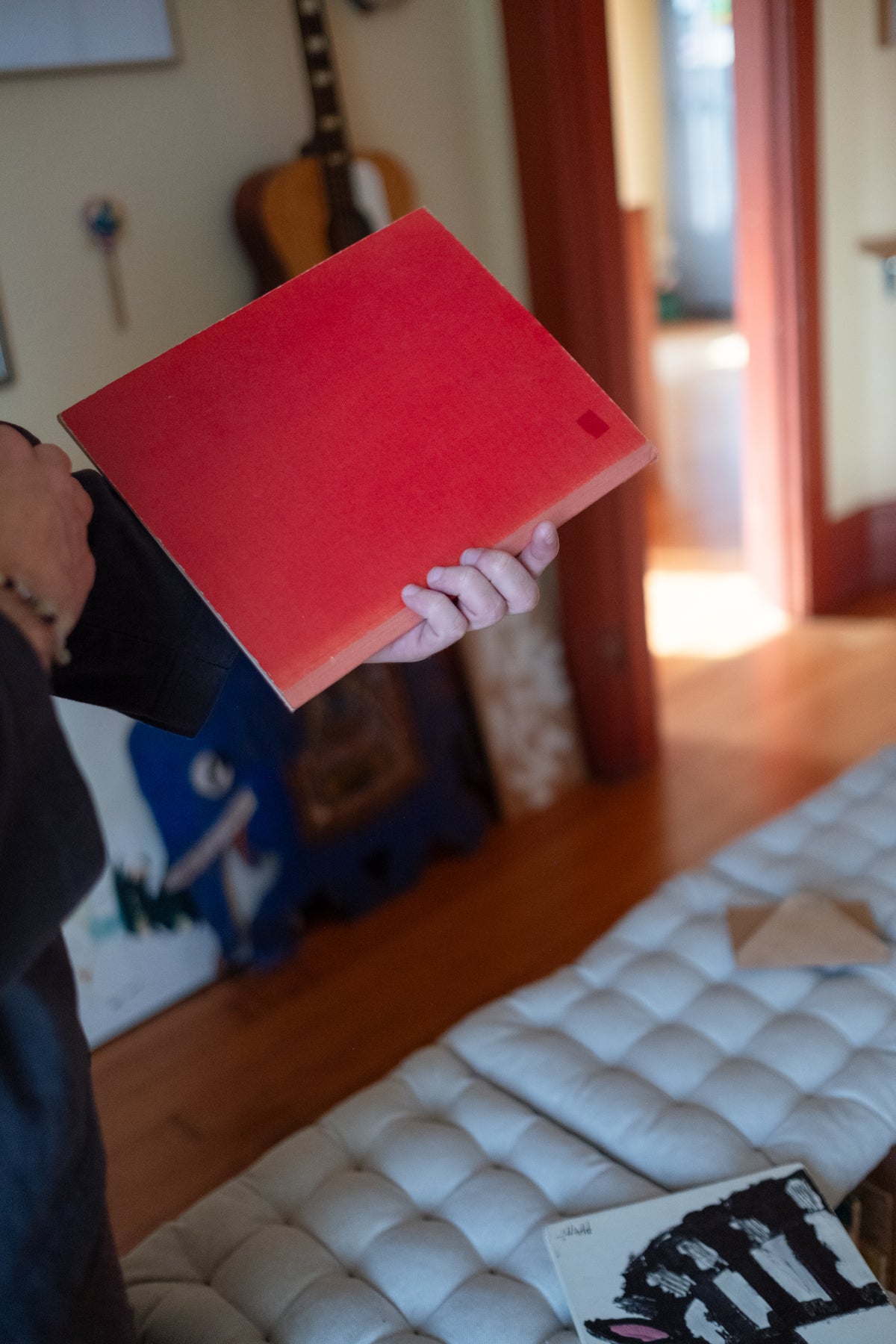
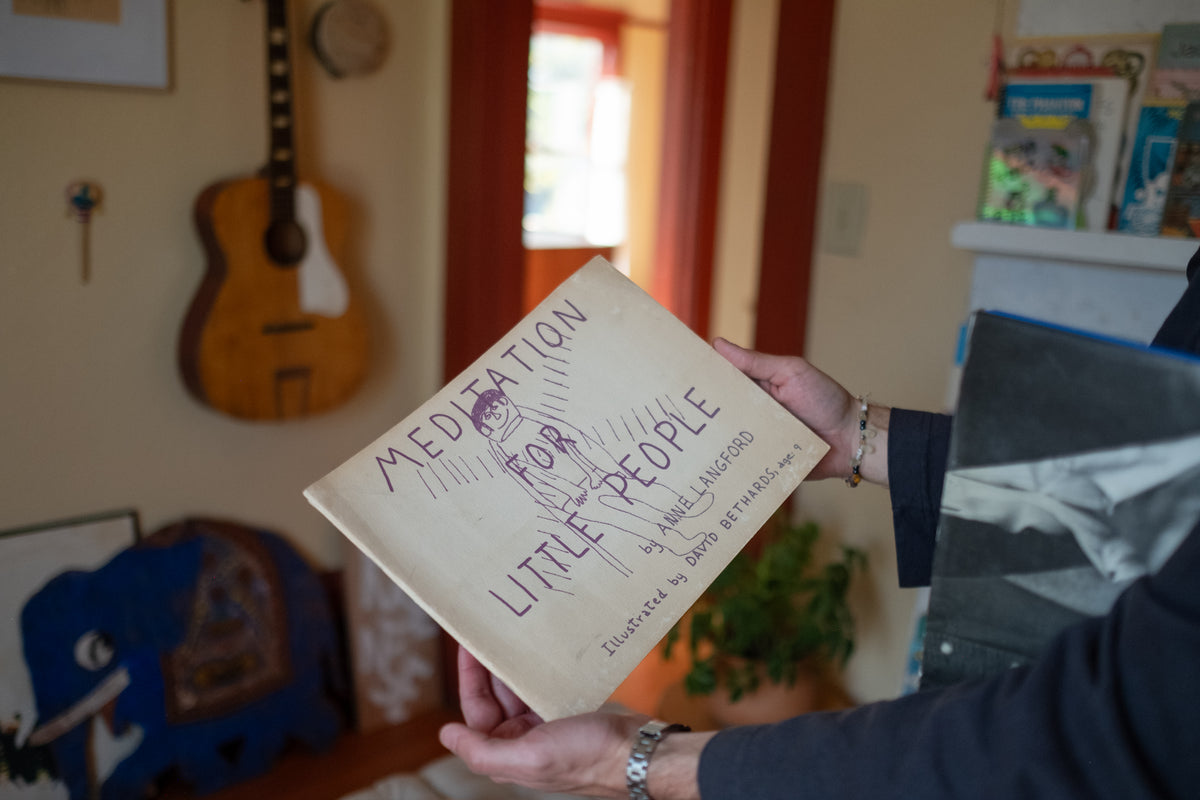
Nonsense Books is a one-room library filled with picture books in the home of Jerrod Beck in North Portland. We visited Jerrod’s space and got to ask him a few questions about his collection…

Shop Boswell: Give us the how/when/why you started Nonsense.
Jerrod Beck: I’ve been collecting picture books since my days studying child development in undergrad, initially acquiring them as part of educational curriculums I had to develop for my classes. Nonsense was born in the fall of 2024 during a time when I felt I maybe had too many books and should probably get rid of some. It was initially a resell project, which helped me to slim down my collection quite a bit and get the Nonsense name out there. However, there were certain books I found myself just not being able to give up and ultimately that feeling of hesitancy or protection or whatever won out and I stopped reselling earlier this spring. I think I hung onto resale a little longer than I wanted because I didn’t have any solid models to reference for alternative approaches to what I was trying to do.
Early on with the project, I remember someone, I think it was Laura Glazer, asked if I had considered creating something along the lines of a library. That stuck with me, and then eventually I came across the references I needed (shout out Library Mothership and Volumes Design Library.) to shape the vision for what Nonsense is now, which is an archive of rare and unusual picture books from the 20th century made available to the public by appointment, during open hours or by attending a workshop.
My “why” behind this project is that I truly hold every book in the collection as sacred and capable of inspiring human beings of all ages — I see the picture book first and foremost as an art object. Particularly with Nonsense, I’m trying to cater to artists, designers, illustrators, authors, and those in academia who may be able to use the collection as a reference library, but picture books are for everyone.

SB: Nonsense strikes me as being a creative practice with a narrow scope of curation. How do you define the parameters of your collecting?
JB: I’m a therapist now for children and families and “scope of practice” is everything with that work. I try to apply that same discipline and discernment to what I’m doing with Nonsense to help rein myself in. In the beginning, the scope was a bit too big and I was trying to source and resell vinyl records and games along with the books. It was too much to keep up with – or, actually, I think it was manageable enough when I was reselling and helped diversify my offerings. But when I shifted to an archive/library model I didn’t even have to think about it – it was just gonna be the books.
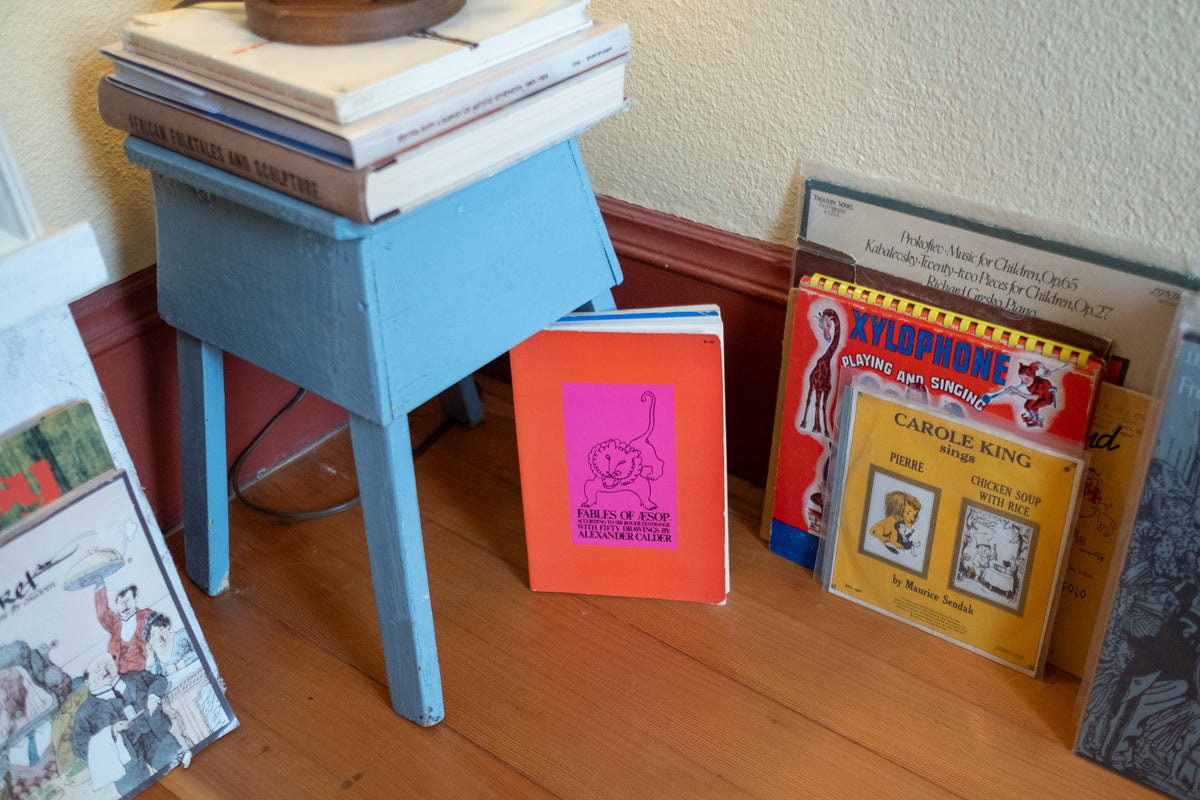
All books in the collection are from the 20th century, with my oldest book right now being from the early 1930s. All books were originally created for a child audience, or for educators (I’ve got a lot of old educational books and ephemera from progressive pedagogies). I’m looking for first editions, hardcover copies with dust jackets, signed editions, books that are out of print, books from different cultures…generally just rare and unusual books. They have to be in great condition, too, I’m not buying something that’s all beat to shit unless it’s something I know is really rare. I’ve got a really good eye at this point and I can just tell by looking at the spine of a book if it’s something I’m interested in.
SB: Tell us more about how people interact with your collection of rare and unusual books originally intended for children. Is your library open to the public and/or what sort of events do you participate in?
JB: Shifting away from resale has made me move with a lot more intention. When you’re not selling something, it’s harder sometimes to find opportunities to get yourself out there, but I’ve found my footing, I think. The Nonsense library is located in my home, which I share with my partner (shout out Angie and thank you for conceding an entire room in our home for my books). Most people are first coming into contact with Nonsense through Instagram, for better or worse. I really loath having to keep up with that online presence, and really I don’t do much with the account.
Really, to meaningfully interact with Nonsense you’ve gotta come handle the books. Folks can do that by appointment (DM or email), or by coming over when I post open hours. Those usually happen on Sundays for a three- or four-hour window. I also ran a four part workshop series this last year called Show and Tell, where guests got to explore the work of various authors and illustrators through a structured experiential learning process. We’d read books aloud, analyze them as a group, then engage in activities to develop our own unique understanding of an artist’s work. These were small gatherings of like 10-15 people. Everything post-resale has been all about quality over quantity. It’s an if-you-know-you-know sort of thing and maybe most people are confused by what I’m trying to do, but I kinda like that.

SB: When visiting your library, I was happy to see quite a few books that are quite conceptual as well as being beautiful. Can you tell us a bit more about how you value these unusual books?
JB: Gosh, the value starts in my heart. That’s corny, but it’s a feeling first most of the time. The value obviously used to really be hung up on what a book was worth monetarily when I was reselling. Now, I’m still interested in that to some extent, because I absolutely love rescuing an under-appreciated/under-valued book from a bookshop or estate sale, and I’m really interested in the artistry behind a book. How a book feels, how you interact with a book, how a book was printed, etc. The conceptual books you’re talking about – notably the Bruno Munari book we looked through – were often created by folks who came from the picture book world after or during rich careers in art and design. They seemingly had so much creative control over how a book was made, and that’s not usually the case.
There are some really great artists and publishers putting out interesting stuff today, and I’m not trying to pit the past against the present, but they don’t make ‘em like they used to. Partly because you just can’t, and partly because we don’t have as many weirdos making books for kids anymore. I say that respectfully, obviously, and I guess I mean not as many eccentrics, like Edward Gorey, Shel Silverstein, Remy Charlip, Ruth Krauss, Cooper Edens. We need more freaks making books for kids.

SB: What can adults gain from appreciating picture books more?
JB: Much needed levity, but also valuable insight into what it means to be human. I figure most people are familiar with The Giving Tree – it’s a good example of a book that transcends childhood. Read that book tomorrow, guarantee you’ll shed a tear. You’re the tree, you’re the boy, the stump, the axe, the question, the answer, the give and the take. Stories in old picture books are often profound. It’s really a “keep it simple, stupid” sort of thing. Beyond that, it’s all about the picture book as art objects. Lots of adults like to collect fine art books, like chunky ass “coffee table books.” You know what those are, in large part? Books with pictures. Go buy an old copy of a Fiona French book and put it in place of that Taschen Matisse Cut-Outs. Your friends and family will respect you more, or at least find you more interesting.
SB: Can you select a few books from your collection that you love and tell us about them?
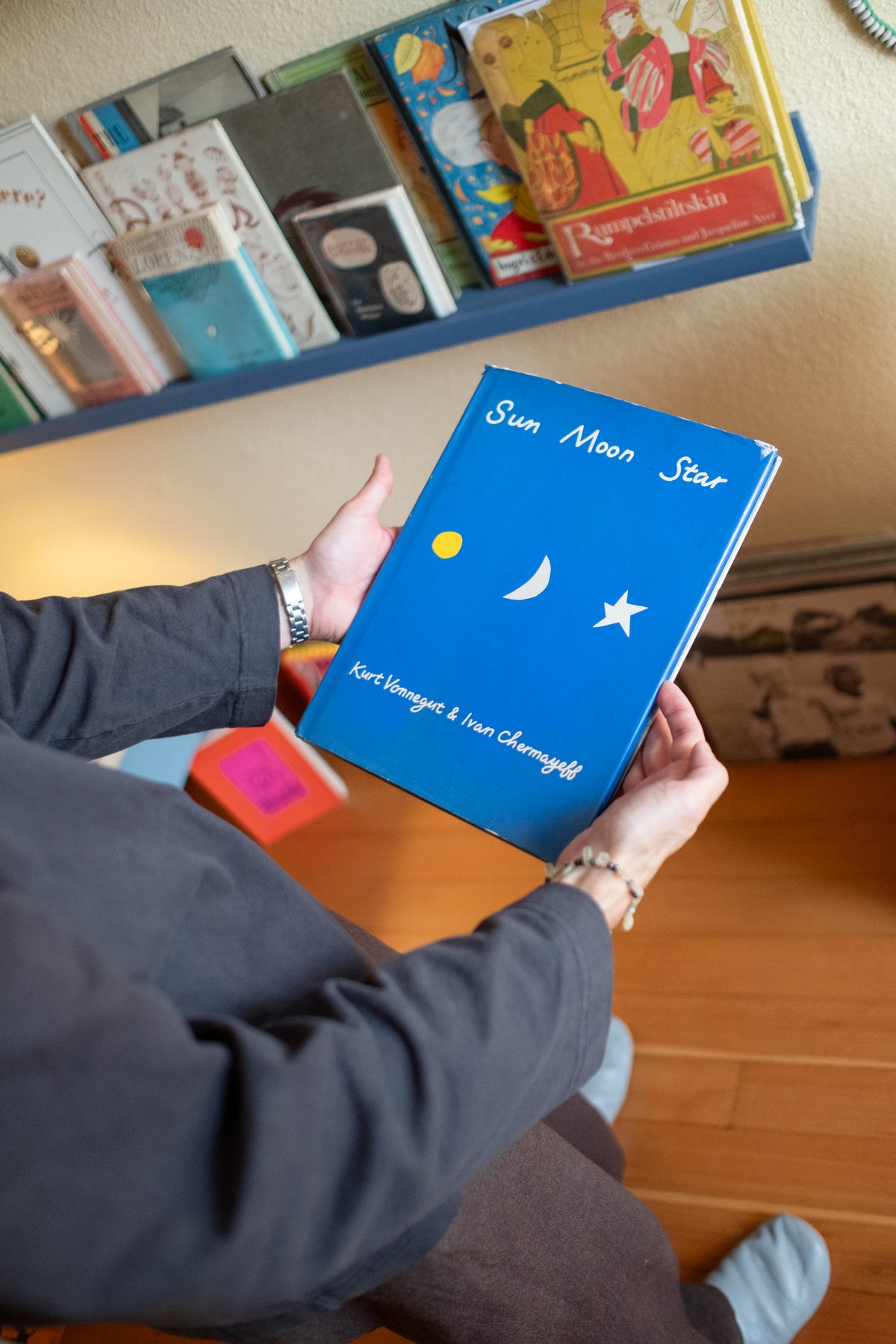
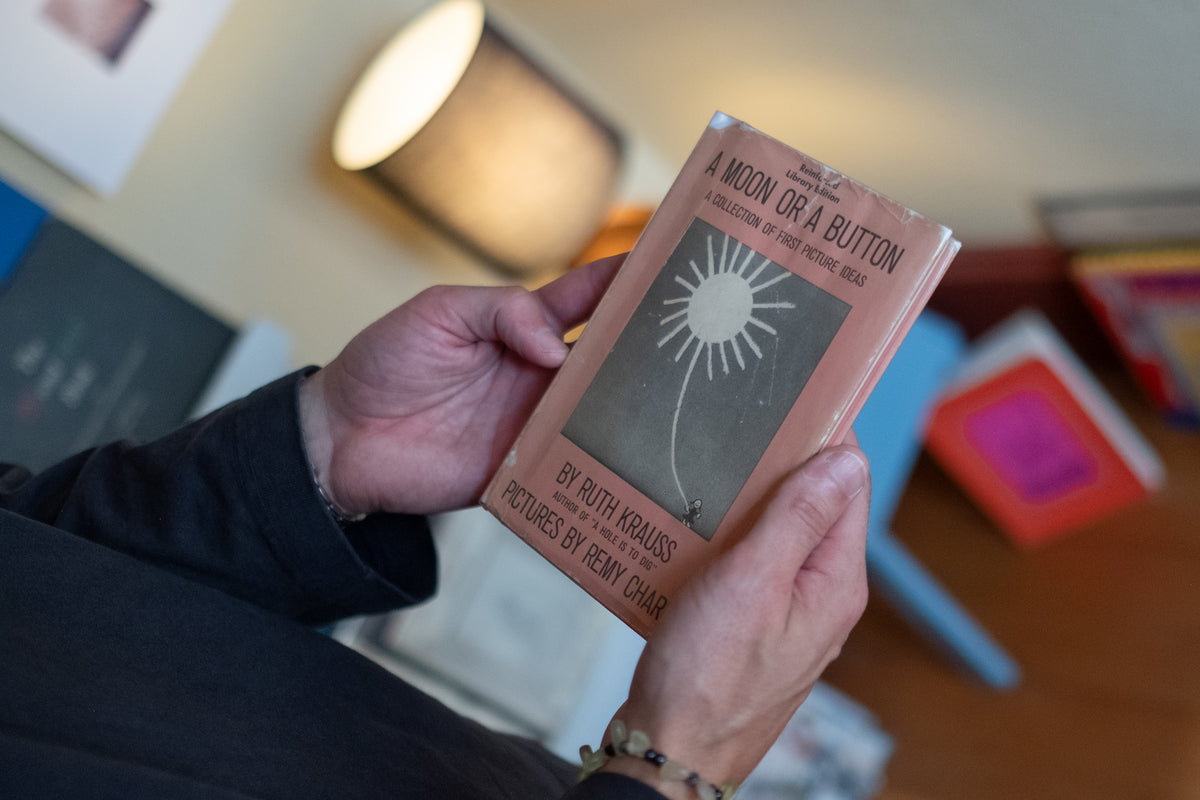
JB: I believe I showed you Ruth Krauss and Remy Charlip’s A Moon or a Button, from 1959. It’s a great white whale in the picture book collecting world, largely because it’s out of print. It’s really a great representation of everything I love about vintage picture books. Wonderful design, with this very uninhibited style to the illustrations and a perfect economy of language. Krauss developed the book with ideas from children she worked with at a public school. One of the other books we looked at was Sun Moon Star, from 1980, written by Kurt Vonnegut and illustrated by graphic designer Ivan Chermayeff. Vonnegut makes a book for children, I don’t really need to say more. Again, we need more weirdos making books for kids.
SB: Do you have any pop-ups or events coming up?
JB: It pleases me to say no I do not. I’m recalibrating Nonsense right now and will be back with new ways to interact with the project next year. I’m seeking out grant funding for a few ideas I have and am trying to make meaningful connections in the book world that can help me grow and develop things with intention. Folks can follow the Instagram account @nonsensebookshop to stay up to date with what’s going on. I may do a few more open hours before the end of the year, and the DMs are always open for those wanting a private visit to the library. Oh, and I accept donations to the library. So, if you’re reading this and you’re like wait there are those old dusty books in my mom’s attic…hit me up and let’s see what ya got.
Thank you, Jerrod, for welcoming us into Nonsense Books!